Introduction to Generative AI and LLMs
Day 1 – Lecture A
Menuka Bhandari
CFAES Bioinformatics Core, OSU
2025-07-13
Overview
Introduction to Artificial intelligence (AI) and Large language model (LLM)
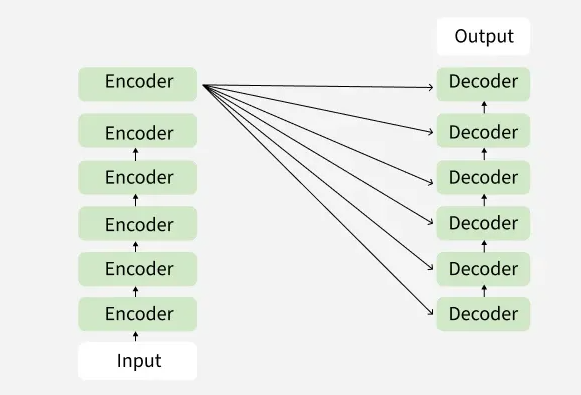
Transformer architectures - Encoder only model, Decoder only model, Encoder-decoder model
Reinforcement Learning
Tokens, Context windows, Embedding
Chat-and-answer vs. agentic AI
Different models with different capabilities and costs
Introduction to AI
- Artificial intelligence (AI)
- Branch of computer science that simulates human intelligence and trains computers to learn human behaviors
- Goal - make machines think like humans and learn human behaviors (reason, predict, and solve problems)
- Combines machine learning, cognition, human-computer interaction, and data-driven decision-making
- Applications in biology:
- Protein sequence & structure prediction,
- Functional DNA element recognition,
- Drug discovery
Introduction to AI(cont.)
- Artificial intelligence (AI)
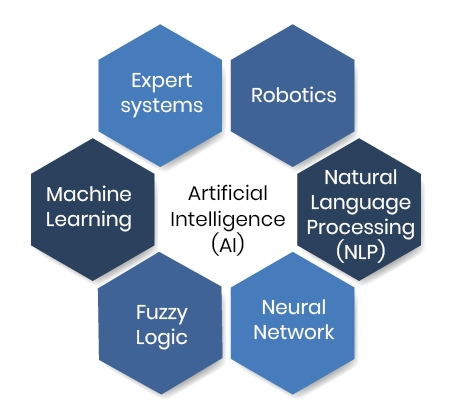
- AI branches relevant to bioinformatics fall into three categories:
- Machine learning: Learns patterns from data. Example: Disease classification from gene expression data
- Neural network: Learns complex biological patterns. Example: AlphaFold predicts protein structures
- NLP: Enables computers to understand & generate language. Example: ProtBERT predicts protein function from protein sequences
![]()
Figure 1. Branches of AI
Introduction to LLM
- Language model (LM)
- LM is a statistical or machine learning model that learns the patterns and relationship within sequences
- Predicts the most likely next word or token based on the surrounding context
- Assigns a probability to different sequences — the more likely a sequence, the higher its probability
- Example; Consider the two sentences:
- The cat sat on the mat✅ (higher probability)
- The cat sat on the refrigerator ❌ (lower probability)
- Limitation of traditional LMs (e.g., N-gram models):
- Struggle with rare or unseen words
- Cannot capture long-range context and dependencies
Introduction to LLM (cont.)
- Large language model (LLM)
- Advanced LM trained on massive amounts of text to understand and generate human language
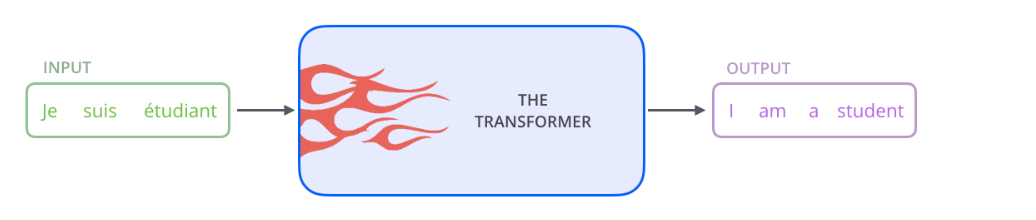
- LLMs are built on Transformer architecture & trained on massive collections of data
- Large in LLM - enormous number of model parameters and the vast quantity of training data
- LLMs are trained to predict the next token or sequence of token in a piece of text
Introduction to LLM (cont.)
- Large language model (LLM)
- Predict the next word (token) based on context, enabling coherent text generation
- Application - language translation, summarization, text generation, and coding assistance etc
- Examples:
- Commercial LLM - ChatGPT (Open AI), Claude (Anthropic) etc
- Open soure LLM - Llama (Meta)
- What can LLM do for the biological scientists?
- Generate, explain, and debug code from natural language prompts
- Automate complex workflows, troubleshoot errors, and analyze data
- Enable researchers with limited programming experience to perform advanced analyses
Introduction to LLM (cont.)
- Large language model (LLM)
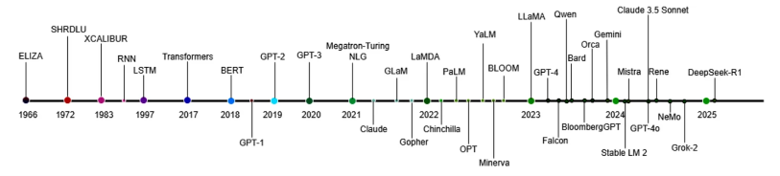
- Rapidly advanced since the introduction of the Transformer architecture in 2017
- Modern LLMs such as GPT, Llama, Claude, Gemini, and DeepSeek have become increasingly capable due to larger datasets, improved training methods, & greater computational power
![]()
Figure 2. Evolution of LLM
Reinforcement learning (RL)
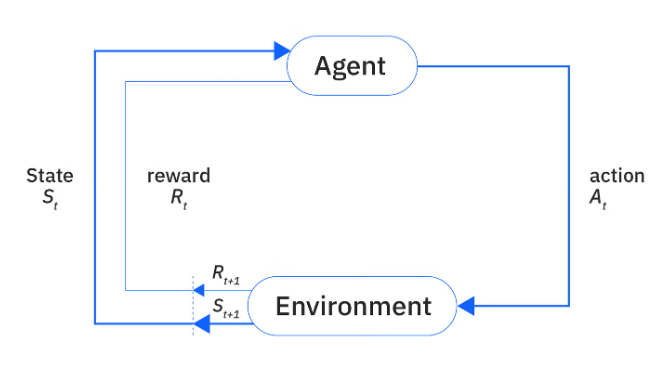
- A machine learning approach where an agent learns through trial and error
- Agent interacts with an environment to maximize rewards and minimize penalties
- Agent is a learning entity that makes decisions
- Successful actions are reinforced, while poor actions are discouraged
- Agent improves its decision-making through experience overtime
- Advantage: Agent can learn in an unknown environment
- Limitations: long training times, low sample efficiency and stability concerns
Reinforcement learning (RL)
- Example; AI guided de novo Drug discovery to optimize drug candidates
- In protein engineering, an AI model generates protein sequences, receives rewards for desirable properties (e.g., higher stability or stronger binding affinity), and uses this feedback to generate improved proteins over time
![]()
Figure 6. Reinforcement learning process
Tokens
- Tokens could be words, characters or the combination of words and punctuation
- Tokenization - converts raw text into smaller units called tokens which is a building block of LLM
- The model uses these tokens together with their surrounding context to understand and generate language
How LLM understand tokens/text?
- LLM break text into small pieces called tokens
- Assign unique ID number to each token
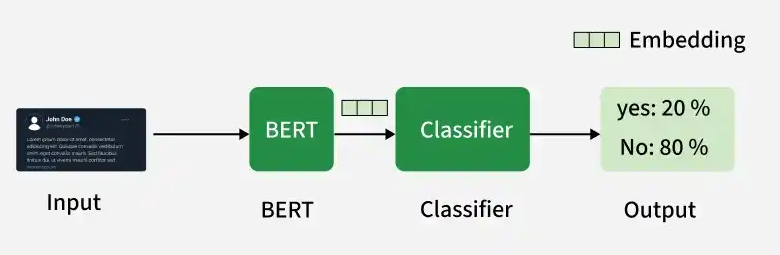
- Convert the token IDs into embeddings (lists of numbers)
- Embeddings capture the meaning and relationships between words, helping the LLM understand context
Tokenization method
| Word level – text split into individual words |
“Transformers”, “are”, “cool” |
Simpler models, limited vocabulary |
| Subword level – text split into partial words |
“Transform”, “ers”, “are”, “cool”, “!” |
Most modern LLMs (Byte Pair Encoding, WordPiece, SentencePiece) |
| Character level – text split into individual characters |
“T”, “r”, “a”, “n”, “s”, … |
Languages with complex morphology or unknown words |
Tokens
Example
Input : Transformers are cool
- Tokens: [“Transformers”, “are”, “cool”]
- Token IDs: [28471, 527, 9123] (unqiue IDs assigned by tokenizer)
- Embeddings: Each token ID is converted into a numeric vector (hundreds or thousands of numbers)
- LLM uses these embeddings to understand the sentence and predict the next token
Importance of tokens:
• Models read token not words
• Context window uses tokens
• Pricing is based on tokens
Embedding
- After tokenization, each token ID is converted into a numerical vector (embedding)
- Embeddings are continuous lists of numbers that AI model can understand process text mathematically
- Similar words have similar embeddings, allowing the model to capture meaning, relationships, and context
- Embeddings capture meaning, relationships, and context, enabling the LLM to understand language
Embeddings (vector embeddings): Learned numerical vectors that capture the semantic meaning and relationships between tokens
Context windows
- Maximum number of tokens LLM can process at one time
- Determines how much of a conversation or document the model can “remember”
- Early LLMs had short windows, but newer LLMs have large context windows
- Larger context windows allow the model to:
- Process longer documents and conversations
- Better understand context across the entire input
- Produce more coherent and accurate responses
- Larger context windows require more computation, making them slower and more expensive
Analogy: Think of the context window as the model’s working memory—the amount of information it can keep “in mind” while generating a response
Chat-and-answer vs. agentic AI
Chat-and-answer AI (Conversational AI)
- Interacts with users using natural language
- Answers questions, explains concepts, and generates content in real time
- Common uses include brainstorming, coding assistance, document summarization, writing, and general knowledge questions
- Example: ChatGPT, Microsoft Copilot, Google Gemini etc
Agentic AI
- Goes beyond answering questions by planning and executing multi-step tasks
- Designed to operate autonomously, make decisions, and execute complex tasks with minimal human supervision
- Example: Claude Code, OpenAI Codex etc
Chat-and-answer vs. agentic AI
| Core purpose |
Answers questions and generates content |
Completes tasks to achieve a goal |
| How it works |
One prompt → one response |
Multi-step workflow with minimal supervision |
| Example task |
Explain a this error |
Fix the error, update the code, run tests, and verify the solution |
| Coding |
Writes or explains code |
Writes, edits, debugs, tests code in your project |
Chat-and-answer vs. agentic AI
| Data analysis |
Explains how to analyze data |
Cleans data, runs analyses, creates figures, and summarizes results |
| Tool use |
Suggests commands or code |
Executes commands, edits files, calls APIs, and uses external tools (with permission) |
| Memory |
Uses information from the current conversation |
Tracks progress, remembers completed steps, and continues working toward the goal |
| Human involvement |
You guide every step |
You provide the goal; the agent manages many intermediate steps |
Chat-and-answer vs. agentic AI (cont.)
Application of agentic AI in the analysis of omics field
- Automating repetitive tasks
- Supporting decision-making, including workflow design, parameter and software selection
- Lowering computational pre-requisites
- Enhancing data organization, management
- Minimizing human errors - improving accuracy and reproducibility
Different models with different capabilities & costs
Selecting the Right LLM: There is no single best model for every task. Different models have different strengths, capabilities, and costs.
Factors to consider
- Capability: How well does the model perform on reasoning, coding, scientific, or language tasks?
- Cost: How expensive is it per million input and output tokens?
- Speed: How quickly does the model generate a response?
- Context window: How much text can the model process at once?
- Multimodal Support: Can it work with text, images, audio, or video?
- Deployment constraints: Can it be accessed via an API, run locally, or deployed in a secure environment?
Different models with different capabilities & costs
Model comparison based on Artificial Analysis data
| GPT-5.5 xhigh |
OpenAI, proprietary |
55 |
88 |
4.35 |
High intelligence but expensive |
| Claude Opus 4.8 max |
Anthropic, proprietary |
66 |
54 |
3.85 |
Frontier reasoning and writing model |
| Gemini 3.1 Pro Preview |
Google, proprietary |
46 |
152 |
1.74 |
Strong frontier model with comparatively high speed |
Source: Artificial Analysis – LLM API Providers Leaderboard (accessed June 7, 2026).
Different models with different capabilities & costs
Choosing the right Claude model:
| Fable 5 |
AI agents - long, complex tasks |
Slow |
High |
| Opus 4.8 |
Deep research and complex reasoning |
Medium |
Medium–High |
| Sonnet 5 |
Everyday use - Coding, writing, analysis, and multi-step workflows |
Fast |
Medium |
| Haiku 4.5 |
Simple tasks - anything you want done instantly |
Fastest |
Low |
Different models with different capabilities & costs
Guidelines for selecting AI Model - There is no single “best” AI model. The right choice depends on your research task, budget, and workflow.
| Literature reviews & grant writing |
Strong reasoning, large context window, citation support |
| Coding & data analysis |
Coding ability, tool integration, reliability, cost |
| Long-document analysis |
Large context window, retrieval capabilities, cost |
| Qualitative or survey analysis |
Consistency, accuracy, ability to follow instructions |
| Large-scale data extraction |
Low cost, fast response, reliable structured outputs |
| Sensitive or confidential data |
Security, privacy, deployment options |
| Teaching & learning |
Ease of use, affordability, fast response |
- Test 2–3 models on a small sample of your actual research task.
- Choose the model that best balances performance, cost, and reliability.